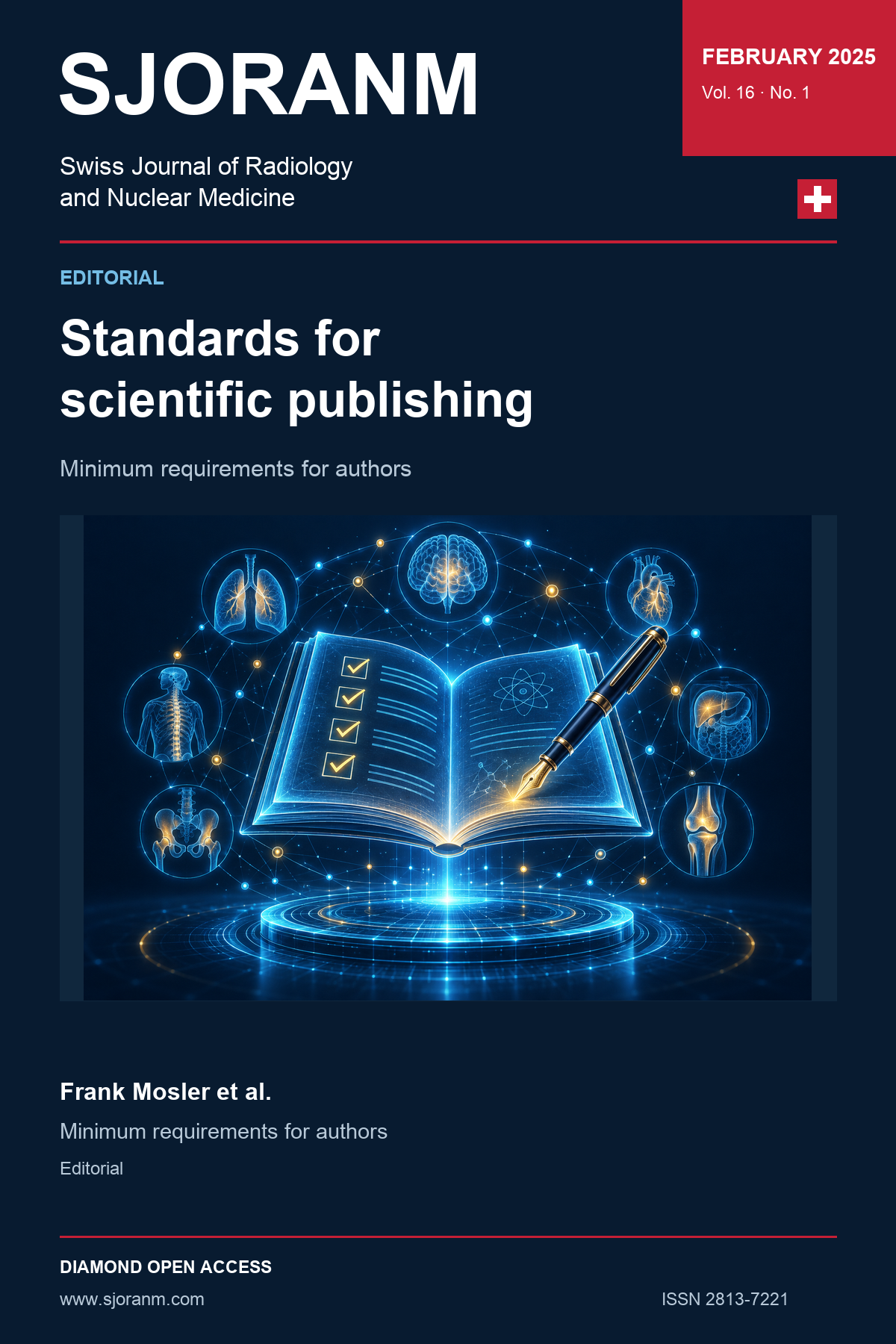
Editorial: Minimum requirements to publish with SJORANM
"Manners maketh man"
DOI:
https://doi.org/10.59667/sjoranm.v16i1.12Keywords:
manners maketh man, compliance, identification of co-authors, piracy, politeness in AI, ethics-based publication standardsAbstract
"Manners maketh man." This phrase is attributed to William of Wykeham (1324–1404) and conveys the idea that good manners and education are essential in shaping a true human being. The expression has also gained wider recognition through the film "Kingsman: The Secret Service".
William of Wykeham was an English bishop, chancellor, and the founder of New College, Oxford (1379) and Winchester College (1382)—one of England’s oldest schools. He played a significant role in English politics and education during the reigns of Edward III and Richard II. His influence on education and architecture was profound, and the institutions he founded continue to exist today.
Approximately 700 years after William of Wykeham, we now benefit from advancements such as the printing press, the internet, and electronic communication. The achievements of the natural sciences and the scientific method represent milestones in human progress—progress that would not have been possible without well-established communication practices and internationally recognized publication standards. One of the most fundamental principles of communication is politeness and respect toward one's interlocutors. Good manners and critical self-reflection are learnable character traits that enhance interpersonal communication. This principle also applies when interacting with artificial intelligence.
When asked, "Why are you polite in your communication with humans?", ChatGPT responds as follows:
Illustrative quotation; original model/version, generation date and conversation record are not documented.
"I am polite because politeness is a fundamental form of respect and fosters positive, constructive communication. People generally respond better to respectful and friendly interactions, leading to more meaningful conversations and a more pleasant exchange. Additionally, politeness reflects what is considered good behavior in many cultures—much like the famous motto 'Manners maketh man'."
This article outlines the key requirements for authors who wish to publish in our DOAJ affiliated journal. Our editorial team operates on a voluntary basis, without financial compensation, ensuring that no publication fees are required from authors. Despite this, all peer-reviewed articles are published with full access to abstracts and PDFs, making them freely available to everyone online.
References
1) Mosler F, The Piracy? What Piracy?. (2024). Swiss Journal of Radiology and Nuclear Medicine, 5(1), 5. https://doi.org/10.59667/sjoranm.v5i1.14 DOI: https://doi.org/10.59667/sjoranm.v5i1.14
2) Garni S N et al, The Regulatory Needs for Radiation Protection Devices based upon Artificial Intelligence: State task or leave unregulated?. (2024). Swiss Journal of Radiology and Nuclear Medicine, 5(1), 5. https://doi.org/10.59667/sjoranm.v5i1.11 DOI: https://doi.org/10.59667/sjoranm.v5i1.11
3) Mosler F, The Radiology in modern economics – business as usual?. (2023). Swiss Journal of Radiology and Nuclear Medicine, 2(1), 1-6. https://doi.org/10.59667/sjoranm.v2i.11 DOI: https://doi.org/10.59667/sjoranm.v2i.11
4) Senge J F et al, The ChatGPT may free time needed by the interventional radiologist for administration / documentation: A study on the RSNA PICC line reporting template. (2024). Swiss Journal of Radiology and Nuclear Medicine, 7(2), 14. https://doi.org/10.59667/sjoranm.v7i2.12 DOI: https://doi.org/10.59667/sjoranm.v7i2.12
5) Bosbach W A, The Learnings from Archimedes on the leverage of medical research funding in the post-Corona era. (2024). Swiss Journal of Radiology and Nuclear Medicine, 11(1), 6-10. https://doi.org/10.59667/sjoranm.v11i1.17 DOI: https://doi.org/10.59667/sjoranm.v11i1.17
Downloads
Published
Data Availability Statement
Data sharing is not applicable to this editorial on publication requirements.
Issue
Section
License
Copyright (c) 2025 Frank Mosler, Gerd Nöldge

This work is licensed under a Creative Commons Attribution 4.0 International License.
This license requires that reusers give credit to the creator. It allows reusers to distribute, remix, adapt, and build upon the material in any medium or format, even for commercial purposes.
 LinkedIn ↗
 X ↗
 VK ↗
 Truth Social ↗
 Bluesky ↗
 YouTube ↗