Vol. 1 No. 1 (2023): Vol. 01 No. 1 (2023)

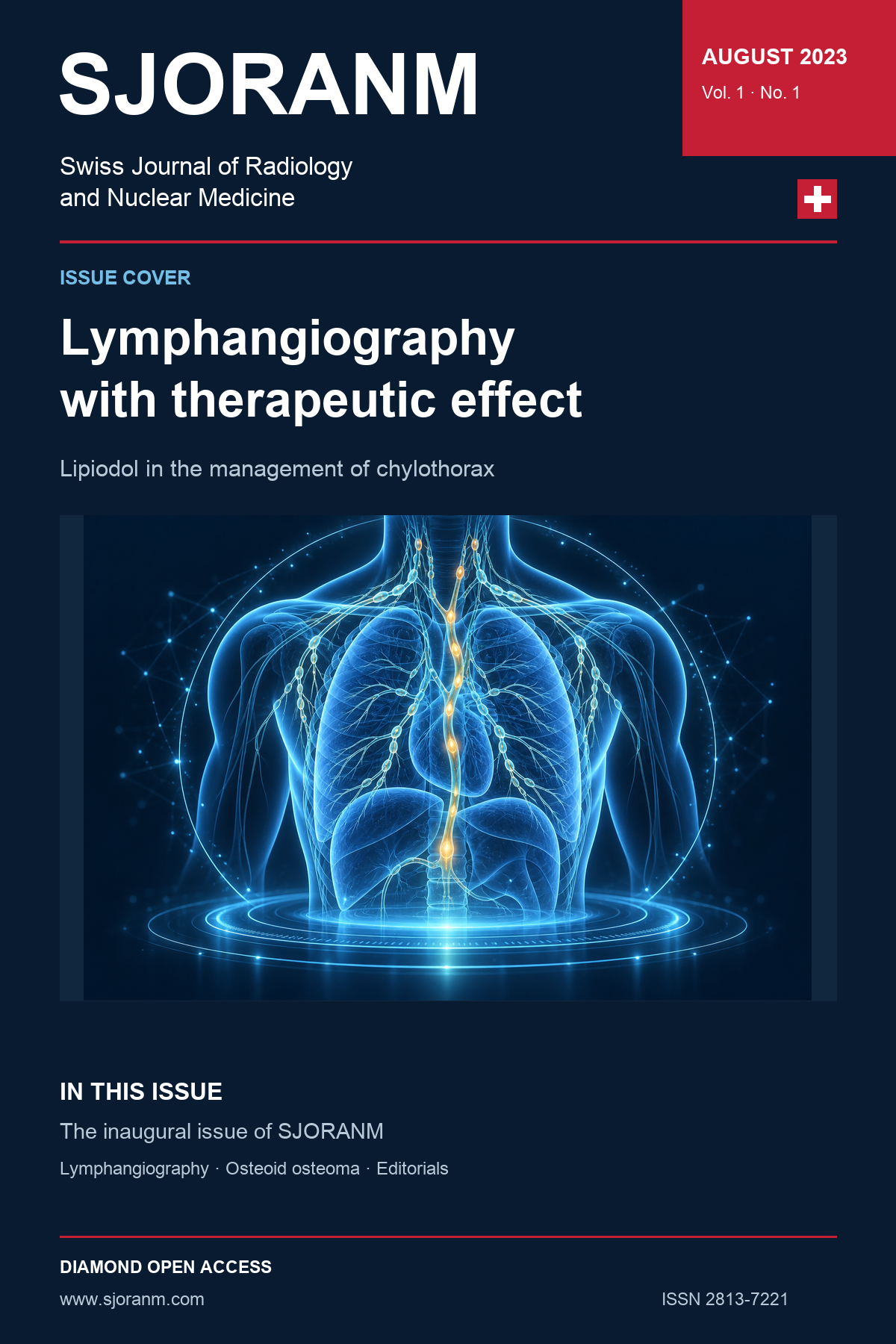
Cover of the first issue of Swiss Journal of Radiology and Nuclear Medicine
Preface to the first issue of SJORANM

https://doi.org/10.59667/sjoranm.v.1i.12 Radiology with its increasing numbers of steadily improving diagnostic and minimal invasive therapeutic methods in combination with the skills of diagnostic and therapeutic procedures in nuclear medicine are meanwhile essential tools on a very high level of patient treatment and care in tight cooperation with the clinicians. Our new Journal (SJORANM) wants to give the chance for quick online access to new ideas, new scientific research and results in the diagnostic and therapeutic field of Radiology and Nuclear Medicine.

-----------------------------------------------

Obituary Prof. Dr. med. Werner Wichmann, MD

https://doi.org/10.59667/sjoranm.v.1i.13 Professor Dr. med. Werner Wichmann passed away on 26.01.2023

Werner Wichmann played a key role in shaping the emergence of the Swiss Society of Neuroradiology SGNR and the discipline itself. As an examiner and commission president, he was committed for many years to the standards to be met by a person working in clinical neuroradiology and at the same time was able to build trust in the next generation.

-----------------------------------------------

The Diagnostic lymphangiography with therapeutic effect: Since more than 70 years Lipiodol is used as an off-label standard of care for chylothorax - why not convert to on-label use?

https://doi.org/10.59667/sjoranm.v1i.14 Purpose: The use of Lipiodol as a diagnostic agent and off-label therapeutic agent has been investigated in well over 395 publications listed in Pubmed under the key words: lymphangiography and chylothorax in the time period between 1921-2021.

While Lipiodol® ultra-fluid has been approved for use as a diagnostic agent in most countries, it can only be used off-label as a therapeutic agent for chylothorax, cholascos, and lymphatic leaks and fistulas. The therapeutic effects in chylothorax and the question why Lipiodol® ultra-fluid is still not approved for on-label use in the treatment of chylothorax are reviewed.

Background: Lipiodol was synthesized as iodized poppy seed oil by the French pharmacist Marcel Guerbet and first described by him in 1901. Over the past 12 decades, it has proven to be a reliable and versatile clinical theranostic agent. Lipiodol® ultra-fluid has been used (a) as a diagnostic contrast agent alone in the clarification and (b) so far only in off-label use as a therapeutic agent for chylothorax or cholascos, e.g. in cases of postoperative lymph leakages. Lipiodol® ultra-fluid has, to our knowledge, only very limited approvals as a therapeutic agent, in Switzerland only for transarterial chemo-embolization (TACE) for liver cancer. For decades and in numerous countries, Lipiodol® ultra-fluid has been in use as first-line treatment of chylothorax, cholascos, lymphatic leakage or lymphatic fistulae, avoiding additional interventions or surgery.

This review aims to assess in which countries Lipiodol® ultra-fluid is approved (a) as a primary diagnostic tool and (b) as a first line therapeutic agent. This review wants to reassess why the general therapeutic approval still lacks, and what could be done to achieve it.

-----------------------------------------------

Osteoid Osteoma – Synopsis of clinical, radiological, and therapeutical relevance of this rare entity

https://doi.org/10.59667/sjoranm.v.1i.15 Characteristic of the osteoid osteoma is the so-called nidus enclosed in the tumor and produces a typical picture on X-ray. Since most physicians have little experience with the clinical picture of osteoid osteoma, this is an important reason for the often-long anamnesis time for osteoid osteoma (OO). The period of formation of OO includes the phase of strongest bone growth in childhood and adolescence. The most characteristic clinical symptom is nocturnal attacks of pain around the tumor, which occur independently of preceding physical activity and respond strikingly well to non-steroidal anti-inflammatory drugs (aspirin test). OO most frequently affects the long tubular bones of the lower extremities. Fifty percent of OO are found in the femur and tibia preferentially occurring in the corticalis of metaphysis and diaphysis. This is followed by the long tubular bones of the upper extremity and the short tubular bones. However, any other bone can also be affected. Differentially, osteoblastoma or osteosarcoma must be considered first and foremost. Most widely accepted therapy options are open surgery with en-bloc resection of the tumor, excochleation,minimally invasive percutaneous CT-guided radio or laser ablation. A conservative management by pharmaceutical pain therapy should be reserved for cases in which surgery must be refused either because of the precarious position of the nidus or because the patient's general condition does not permit it, or the patient does not consent to surgical interventions.

Published: 2023-08-29